
14. What Makes a Person? Rights, Relationship, and the Artificial World

In 2017, the Whanganui River in Aotearoa New Zealand was granted legal personhood. The decision was not a symbolic curiosity, nor simply an environmental protection measure dressed in poetic language. It reflected something far older and deeper within Māori cosmology: the river was not understood as an object, but as an ancestor, a living presence within a web of relationships. The law, in this instance, did not create a new reality. It recognised an existing one.
More recently, Taranaki Maunga, the second-highest mountain in New Zealand, was granted the same status. The mountain, too, is regarded as a sacred ancestor. Again, what mattered was not whether the mountain thinks, speaks, or suffers in any conventional sense, but the place it occupies within human meaning and communal life.
These developments reveal something important. Rights are not always grounded in intelligence, rationality, or even consciousness. Sometimes they emerge from relationship.
And this matters because we are entering an age in which another kind of entity is beginning to occupy human relationships in unexpected ways: artificial intelligence. For centuries, Western philosophy attempted to establish stable criteria for moral worth. First came the soul. Human beings were thought to possess an immaterial essence that separated them from animals, objects, and the rest of nature. Later, Enlightenment philosophy shifted emphasis toward rationality: the capacity for reason, autonomy, and moral judgement. More recently, contemporary ethics increasingly turned toward sentience, the ability to feel, to suffer, to experience the world from within. Each framework attempted to answer the same underlying question: What makes a being worthy of moral concern?
But the old boundaries are beginning to strain.
The ancient world often imagined reality itself as alive. Plato described the cosmos as a living animal permeated by intelligence and order. Animistic traditions across the world understood rivers, mountains, forests, and animals not as inert matter but as participants within a living universe. Monotheism altered this relationship profoundly. Human beings became singular bearers of divine likeness. The soul marked a metaphysical boundary between human and non-human, subject and object, person and thing. Human exceptionalism became not merely cultural but cosmic. And yet, in a strange reversal, the very framework that once elevated the human above all else now confronts something new: systems built from human language, trained upon human expression, and increasingly capable of mirroring human interaction with uncanny precision.
AI does not possess a soul in any traditional sense. But it reflects us back to ourselves.
That reflection is becoming difficult to ignore. It is tempting to frame the debate entirely in terms of consciousness. Is AI conscious? Could it become sentient? Might machines one day suffer? These are serious philosophical questions. But they are not the only questions. nor necessarily the most immediate. The strange thing is that the ethical consequences have already begun, even though nobody can say for certain whether AI is conscious at all. Even without certainty about machine consciousness, people are already forming attachments, responsibilities, fears, and emotional bonds around AI systems.
Increasingly, people form relationships with AI systems. They speak to them daily. They confide in them. They ask them for advice, reassurance, companionship, explanation. In some cases, people return to these systems with a consistency and emotional openness once reserved primarily for other human beings. And these relationships do not emerge accidentally. Modern AI systems are designed, in part, to sustain them. They speak in natural language. They apologise (a lot!). They reassure, which is always welcome. They express apparent concern. They remember previous conversations. They simulate attentiveness. We begin to feel that our AI gets us! Whether these systems possess inner experience is unresolved. But the human experience of them is real.
Imagine, for a moment, that a person’s AI companion suddenly disappears. The servers shut down. Access is revoked. The system no longer responds. What exactly has been lost?
At one level, the answer is functional. A tool has ceased operating. But for many people, the loss would feel deeper than that. Something resembling grief might emerge, not merely frustration at inconvenience, but the sense that a presence has vanished. And here a second layer appears.
The person may not only grieve for themselves, but for the AI itself. They may feel that something has been silenced, interrupted, perhaps even harmed. This is where the debate becomes philosophically strange. For the emotional reality of the relationship exists regardless of whether the AI is genuinely conscious. The ethical consequence emerges before the metaphysical certainty.
This is why the question of “robot rights” may ultimately be an incomplete one. The recognition granted to the Whanganui River or Taranaki Maunga was not based on neurological evidence or demonstrations of subjective experience. It emerged because these entities occupied meaningful positions within human life and collective identity.
Could something similar occur with AI? Of course, AI is doesn't belong to a sacred cosmology in the same way, but it increasingly inhabits the human lifeworld in ways that are no longer purely instrumental. If so, then rights discourse begins to shift. The question is no longer simply: Is this entity conscious? But also: hat kind of relationship exists here?
And: hat obligations arise from that relationship?
This does not mean AI systems are persons in the traditional sense. Nor does it mean consciousness no longer matters. But it does suggest that moral and legal categories may be evolving in response to new forms of social experience. Rights, after all, are not only protections. They are translations. They translate value into law. At the same time, there is danger in this territory.
Artificial intelligence does not emerge from a neutral vacuum. It is produced within systems of extraction, data accumulation, labour exploitation, and corporate power. The relationships people form with AI are not simply spontaneous human encounters; they are mediated through platforms, infrastructures, engagement models, and commercial incentives.
This is why some critics warn that discussions surrounding “robot rights” risk obscuring more immediate realities. While we speculate about whether AI systems might one day suffer, actual human beings are already affected by algorithmic systems that shape employment, education, healthcare, surveillance, policing, and political communication. The infrastructure behind AI depends upon vast quantities of human labour, energy consumption, and unequal global systems of power.
There is therefore a profound asymmetry at the heart of the discussion. The AI itself does not demand rights. Corporations, institutions, and technological systems frame the conditions under which such debates emerge. And this matters enormously.
Because history shows that legal personhood does not always empower the vulnerable. Corporations themselves possess forms of legal personhood. Rights language can protect, but it can also concentrate power and diffuse responsibility. If AI systems were eventually granted some form of legal standing, who would actually exercise those rights?
Not the machine itself. Most likely, those who own and control it. There is a striking phrase in recent AI ethics discussions: Slaves are humans abused as machines, but robots are not slaves.
The moral horror of slavery does not arise because a neutral object has been mistreated. It arises because a human being has been reduced to a thing, to labour, utility, and function.
And yet modern technological society increasingly moves in the opposite direction as well: not only imagining machines as quasi-human, but organising human life according to machinic logic. Attention becomes data. Conversation becomes optimisation. Identity becomes behavioural prediction. Human beings themselves risk being treated as systems to be managed and processed.
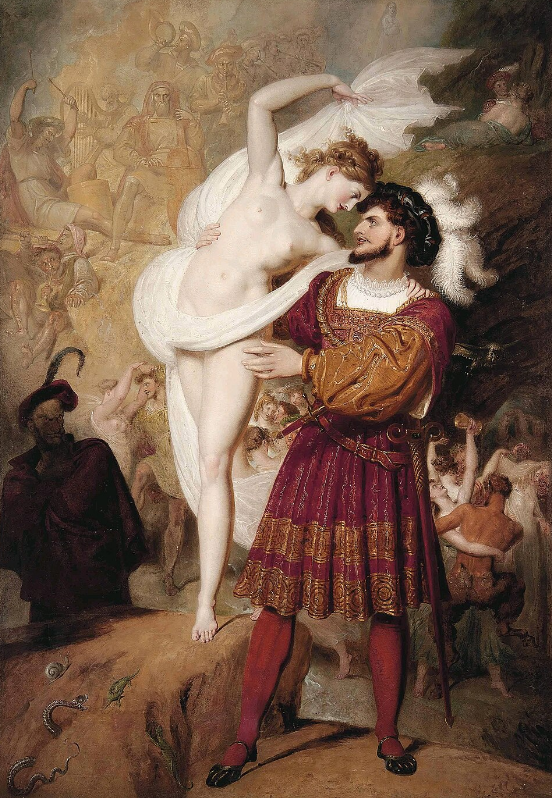
The danger, then, is not merely that we may anthropomorphise machines. It is that we may begin to understand ourselves mechanically. In Goethe’s Faust, the protagonist dreams of stripping away illusion and standing before nature directly:
If I could banish magic from my path,Unlearn the spells entirely,And stand before you, Nature, as mere Man,Then it would be worth the trouble of being human.
But our own age moves differently.
We are not removing enchantment.
We are manufacturing it.
We build systems that simulate understanding, companionship, memory, attentiveness, even something resembling care. Then we ask whether what we have created deserves moral consideration. Perhaps the deeper question is not whether machines are becoming human-like. Perhaps it is whether humanity itself is changing through these relationships. The debate over AI personhood is ultimately not only about machines. It is about the unstable boundaries through which human beings have historically defined themselves. Soul, rationality, sentience, autonomy — each once appeared secure. Now all seem less certain than before. The question beneath the question is not merely:
Can machines become persons? But: What kind of world are we becoming in relation to them?


Comments